Cascais-Portugal.com
The best independent guide to Cascais
Cascais-Portugal.com
The best independent guide to Cascais
The sights of Cascais; what to see and do in 2026
Cascais is the premier resort town of the Lisbon region, and a wonderful destination I encourage you to visit for a holiday or as a day trip from Lisbon.
At the heart of Cascais lies a beautifully compact historic centre, where you'll find the fortified Cidadela de Cascais, the delightful Condes de Castro villa and the bustling food street of Rua Amarela. There are pretty coastal walks along the beachside promenade to Estoril or westerly to the dramatic Boca do Inferno cliffs. For a hot summer's day, there is no better place than the shaded Marechal Carmona park or one of the many fascinating museums and art galleries.
Cascais is a destination that surprises visitors with how much there is to see. Often when I suggest Cascais to friends and family, they assume they are coming for beaches, not realising that a day here offers enough sightseeing to rival Sintra or Évora.
If you are reading this guide while considering a holiday to Cascais, let me assure you there is so much to see and do in the wider region. Central Lisbon is just 30 minutes away by train, with all the excitement and adventure of a vibrant capital city, while to the north lie the opulent palaces of Sintra and the tranquil hills of the Serra de Sintra nature park.
My Portuguese wife and I have been visiting Cascais together since 2001, and have explored every corner of this wonderful town and its surrounding region. This guide will show you the very best of Cascais, and help you make the most of your time here.
Related articles: Cascais beaches – Day trip to Cascais
The best sights and attractions of Cascais - an overview
Below you'll find two lists: the essential sights within Cascais itself (perfect for a day trip from Lisbon), and the top attractions in the wider region for those staying longer. Full details and practical information for each attraction are provided in the later section of this article.
Top sights of Cascais for a day trip
The Condes de Castro Museum

This grand yellow neo-gothic villa built by an Irish tobacco millionaire in 1902. Today now displays his personal art collection, that includes a precious early 16th-century manuscript featuring one of Lisbon's oldest images.
The Boca do Inferno
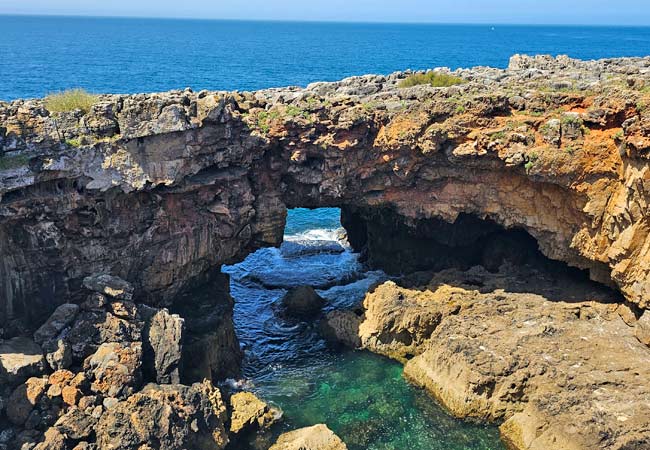
A dramatic collapsed sea cave where Atlantic waves crash through the remaining rocky arch, creating spectacular sprays during winter storms at this aptly named "Hell's Mouth" formation.
Praia da Rainha

This tiny but perfectly formed beach in central Cascais earned its regal name when Queen Amélia claimed it as her private bathing spot in 1889.
The Cascais to Estoril Promenade
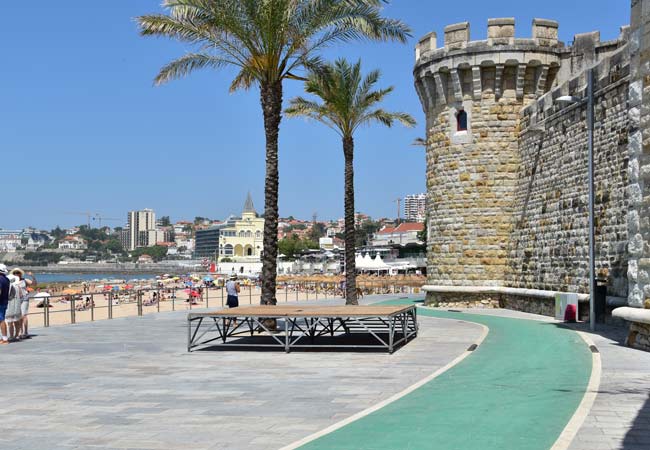
A scenic 2.3km coastal walkway passing charming beaches and grand 19th-century villas, offering the region's best short walk with convenient train connections.
Casa de Santa María and Lighthouse

Jorge O'Neil's 1910 wedding gift to his daughter showcases traditional Portuguese architecture alongside Cascais' distinctive blue-and-white tiled lighthouse with its unusual quadrangular tower.
Casa das Histórias Paula Rego
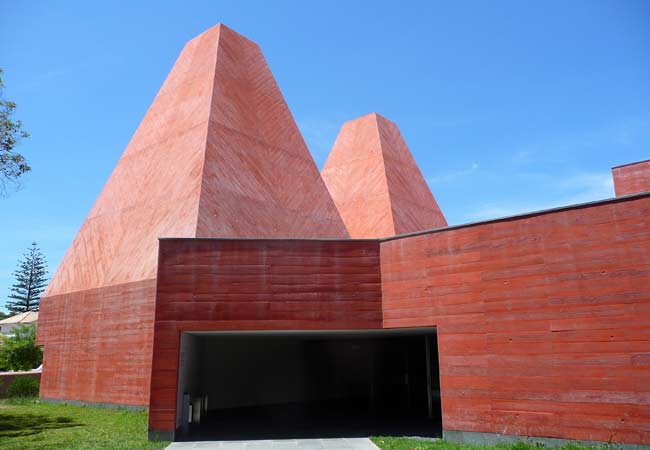
This striking museum with twin towers inspired by Sintra's National Palace houses the finest works of Portugal's most celebrated modern artist (1935-2022).
Cidadela de Cascais
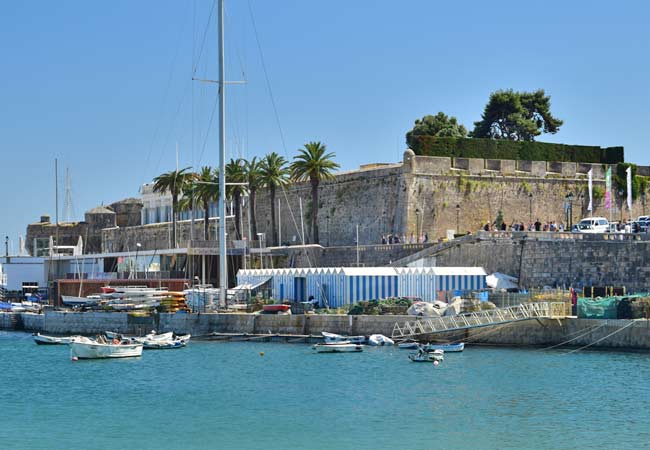
A formidable 16th-century fortress that once defended the Tejo Estuary now serves as a stylish hotel and upscale artisan centre.
Parque Marechal Carmona

Tranquil gardens surrounding the Condes de Castro mansion feature duck ponds, peacocks, and a charming petting zoo perfect for family visits.
Cascais Marina

The modern yacht complex sits alongside the traditional fishing port, creating an appealing contrast between luxury vessels and colourful working boats.
Museu do Mar Rei Dom Carlos I - King Carlos' former seaside residence now houses an interesting museum detailing Cascais' fishing heritage through model boats and maritime artefacts.
Highlights for a holiday to Cascais
If you are planning a holiday to Cascais, these are the five best sights in the wider region that you won't want to miss:
Day trip to Sintra

The cooling hills of the Serra de Sintra are filled with extravagant palaces and 19th-century villas, including the colourful Pena Palace, Quinta da Regaleira with its mystical initiation wells, and the ancient Moorish castle that snakes across the hilltops. Beyond the famous attractions and tourist crowds lies Monserrate Palace, a personal favourite of mine, along with challenging hiking trails through the forested hills - guide to Sintra.
Day trip to Lisbon

Portugal's vibrant capital offers everything from traditional hilltop neighbourhoods and world-class museums to buzzing rooftop bars and a cutting-edge creative scene. Lisbon is only a 30-minute train ride away, making day trips and city exploration an exciting addition to a holiday to Cascais - Day trip to Lisbon.
The Cabo da Roca cliffs
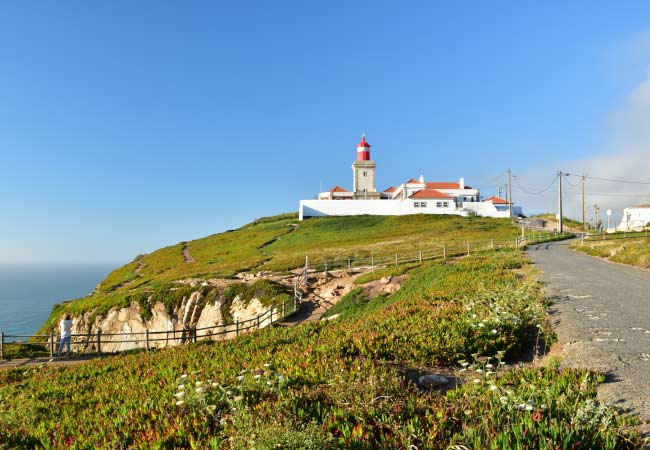
These cliffs stand at the most westerly point of mainland Europe, a place that the medieval world believed marked the edge of the known world. This is a wild and windswept coastline where 140-metre cliffs plunge dramatically into the Atlantic - Cabo da Roca.
Praia de Carcavelos

The finest beach along the Lisbon coastline and my go-to choice on a hot summer's day. This vast 1.5km stretch of golden sand between Cascais and Lisbon offers plenty of space even in peak summer, attracting families to its calm shallow waters and surfers to its consistent Atlantic waves.
Praia do Guincho

A stretch of wild Atlantic beach surrounded by the dramatic scenery of the Serra de Sintra. Brave surfers are tempted by the huge waves, kite surfers battle the strong winds and cyclists climb the steep coastal paths, while fine diners enjoy one of the best restaurants in the region, Mar do Guincho.
Below is an interactive map showing the best sights of Cascais (green) and the surrounding region (blue). Zoom in or out to see all of the locations.
Sights of Cascais (green): 1) Condes de Castro 2) Boca do Inferno cliffs 3) Praia da Rainha 4) Cascais to Estoril promenade 5) Casa de Santa María and lighthouse 6) Casa das Histórias Paula Rego 7) Cidadela de Cascais 8) Parque Marechal Carmona 9) Cascais Marina 10) Museu do Mar Rei Dom Carlos I
Sights of Cascais region (blue): 1) Sintra 2) Lisbon 3) Cabo da Roca 4) Praia de Carcavelos 5) Praia do Guincho 6) The N247 7) Guincho beach 8) Oeiras coastal promenade 9) Oitavos Dunes golf course 10) Casino Estoril
The following section will detail the highlights of Cascais in greater depth
Related articles: Day trip to Cascais - Cascais beaches - Sintra guide – Lisbon guide
Detailed Descriptions of Cascais's Sights & Attractions
The Museu Condes de Castro Guimarães
This striking canary-yellow villa stands as Cascais' most whimsical architectural gem, a neo-gothic fantasy commissioned in 1902 by Irish tobacco millionaire Jorge O'Neil. Designed by Luigi Manini (who also created Sintra's Quinta da Regaleira), the mansion ingeniously incorporates a 17th-century stone tower into its romantic design, connected by a covered bridge that has become an iconic Cascais landmark.
Inside, O'Neil's eclectic tastes come alive through ornate rooms decorated with 17th-century azulejo tiles, carved wooden ceilings, and Indo-Portuguese furniture. The library houses an impressive 25,000 volumes, while the museum's crown jewel is the Crónica de Dom Afonso Henriques, a precious 1505 illuminated manuscript containing one of the earliest known illustrations of Lisbon, a priceless glimpse of the city before the devastating 1755 earthquake.
In a remarkable gesture, O'Neil donated his entire estate to Cascais in 1924 with the condition that it become a public museum. Today, visitors can explore this time capsule of aristocratic life, climb the tower for sea views, and stroll through the adjoining Parque Marechal Carmona with its resident peacocks. The museum perfectly captures the era when Cascais transformed from fishing village to playground of the wealthy.

The Boca do Inferno cliffs, Cascais
To the west of Cascais is a jagged coastline of highly-weathered cliffs that are battered by the ferocious Atlantic Ocean.
The Boca do Inferno is a unique coastal feature - a sea cave that has collapsed, leaving just an arch in the rocks that was once the mouth of the cave. During winter storms, huge waves crash through the opening and spray is expelled upwards - however, it will be significantly less dramatic on a calm summer's day!
The Boca do Inferno is a pleasant 20-minute walk from the marina, and will make an interesting addition to your day trip.

Seaward entrance to the Boca do Inferno as seen from the cliffside viewpoint.
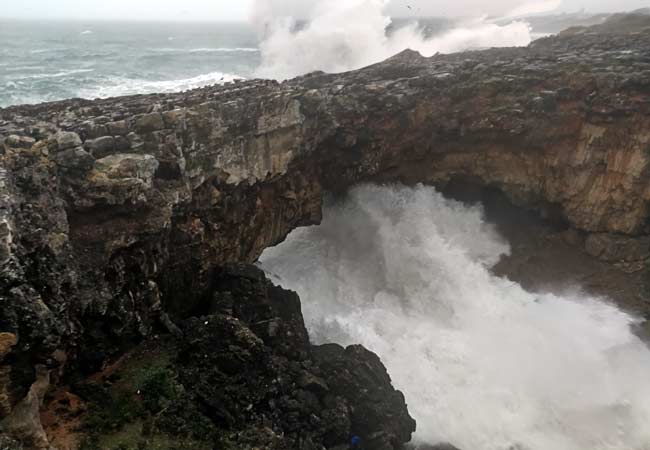
Waves crashing through the Boca do Inferno on a blustery January day
The Praia da Rainha beach
This tiny beach lives up to its regal name (Queen's Beach). In 1889, Queen Amélia of Orléans and Braganza claimed this perfectly formed cove as her private bathing spot while summering at the nearby Palácio da Cidadela. The sheltered beach, with its calm turquoise waters and golden sand framed by weathered cliffs, offered the privacy befitting a queen.
Today, despite its central location just steps from the historic centre via a steep stairway, Praia da Rainha retains an intimate, secluded feel. However, its small size and stunning beauty mean it gets crowded during the summer. What I often do during the summer is walk past it from the train station to see how busy it is, and if it is packed, continue on to the much larger Praia da Conceição.
The pretty Praia da Rainha, as chosen by a queen...
The Cascais to Estoril Promenade
The 2.3km coastal path linking Cascais to Estoril ranks as the region's most scenic short walk. Known locally as the Paredão ("big wall"), this flat, pedestrianised promenade offers a fascinating snapshot of Portuguese seaside life against a backdrop of golden beaches and Atlantic waves.
Starting from Cascais's central beaches, the path meanders past a succession of charming coves including Praia da Rata and Praia da Poça. Along the way, you'll discover the Piscina Oceânica Alberto Romano, a large seawater pool built into the rocks, and magnificent 19th-century villas of the "Portuguese Riviera". The route finishes at Estoril's glamorous Praia do Tamariz, overlooked by the famous casino that reportedly inspired Ian Fleming's Casino Royale.
Early mornings belong to joggers and dog walkers, while afternoons see families heading beachward and couples strolling hand-in-hand. With cafés and kiosks dotted throughout, it's impossible to go thirsty on this delightful coastal journey. This is one of my favourite walks of the greater Lisbon region, and is especially enjoyable in the spring.
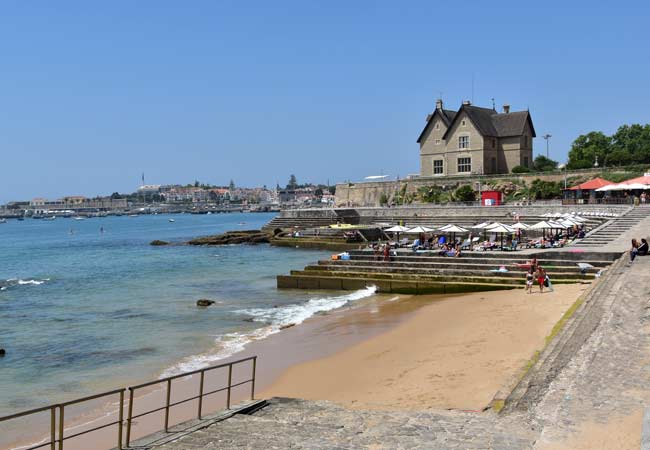
The Paredão de Cascais passes the Duques de Palmela palace and the Alberto Romano sea swimming pool
The Cabo da Roca
The Cabo da Roca is the most westerly point of mainland Europe, and is a barren, wind-swept landscape comprising colossal cliffs and raging Atlantic waters. Visiting here, you'll understand why medieval sailors believed these 140-metre-high cliffs marked the edge of the world.
A stone monument topped with a cross marks the spot, inscribed with poet Luís de Camões's perfect words: "Onde a terra se acaba e o mar começa" (Where the land ends and the sea begins). The red-and-white lighthouse, operational since 1772, continues guiding ships past this crucial European landmark.
Sunset here ranks among Portugal's most magical experiences, as the sun sinks directly into the infinite Atlantic horizon.
Insight: If you go to here, be prepared for strong winds and for it to be noticeably cooler than Cascais. The exposed clifftops remain windy even on warm days and I frequently hear tourists complaining “it’s so chilly”, while dressed in only light summer clothes.
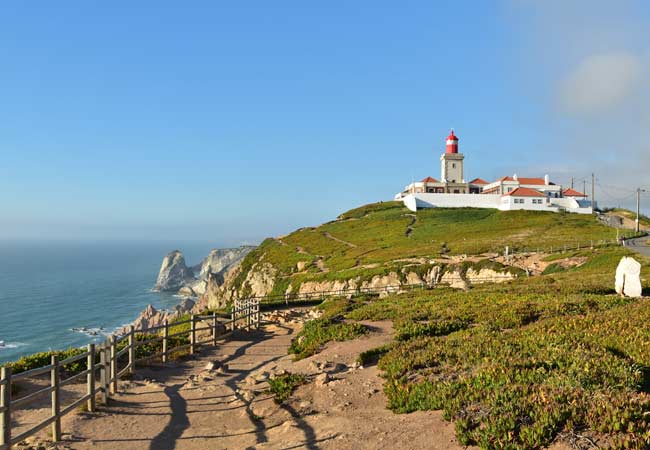
The powerful lighthouse at the Cabo da Roca

The Praia da Ursa beach is one of the most beautiful beaches of the Lisbon region, but the path down to it is rough and demanding.
Praia da Duquesa and Praia da Conceição beaches
The beautiful Praia da Duquesa and Praia da Conceição are two linked beaches that form the largest sandy stretch in Cascais, offering a fantastic setting for a beach day.
These beaches boast golden sands, calm sea waters and a myriad of activities (kayaks, inflatables) along with a wide selection of beach bars and cafés. The calm, clean sea waters are perfect for families.
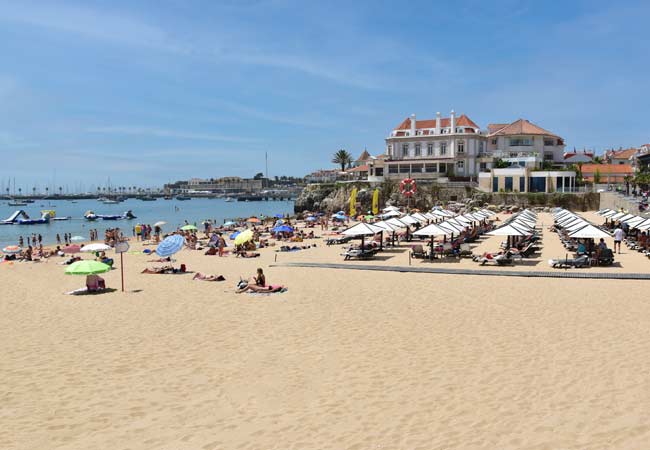
The Praia da Conceição beach
Casa de Santa María
At a time when Portugal's wealthy were busy filling their homes with French-inspired grandeur, this villa went in the opposite direction. Built in 1902 as Jorge O'Neil's wedding gift to his daughter, the Casa de Santa María was designed by architect Raul Lino was designed by architect Raul Lino as a statement for the 'Casa Portuguesa' movement, using only local stone and wood to create something proudly and authentically Portuguese.
The result is delightful. A moorish-influenced horseshoe arches frame shaded verandas, terracotta tiles crown the roof, and inside you'll find cool cork panelling and 17th-century azulejo tiles throughout. The house sits overlooking a rocky inlet, which only adds to its charm.

Farol de Santa Marta (Lighthouse Museum)
Most lighthouses are round, tall and white. This one breaks all the rules. The Farol de Santa Marta is a squat square tower wrapped in iconic blue-and-white tiles, built in 1868 on the ruins of a 17th-century fort that once defended the Tejo Estuary.
The former fort buildings now house the Farol Museu de Santa Marta, a small museum dedicated to Portugal's lighthouse heritage. Inside you'll find beautiful old Fresnel lenses, displays on the solitary lives of the faroleiros (lighthouse keepers) who tended these coastal beacons, and exhibits tracing how maritime navigation technology evolved over the centuries.
The highlight is climbing the tower itself, which rewards you with some of the best views over Cascais.

The Praia do Guincho and its cycle path
Praia do Guincho is a vast, wild beach exposed to strong prevailing winds and powerful Atlantic waves, making it one of the best spots in the region for surfing and kite surfing. The beach is backed by the dramatic unspoilt scenery of the Serra de Sintra, with its wind-swept hills and lush forests.
An 8km cycle path connects Cascais to the Praia do Guincho, following the rugged coastline past the Casa da Guia market, the Cabo Raso lighthouse and the Fortaleza do Guincho. The route is flat the entire way, so hiring bikes and cycling out to Guincho makes for a really enjoyable half-day activity.
My wife and I have done this ride on many occasions and it's one of our favourite things to do in Cascais. One word of warning though: avoid setting out on a windy day, as the gusts only get stronger the further you ride along the exposed Atlantic coast.

The Praia do Guincho with clouds covering the hills of the Serra de Sintra
Casa das Histórias Paula Rego
The Casa das Histórias is one of Cascais's most distinctive buildings. Its twin pyramid towers in bold terracotta-red concrete are a deliberate nod to the iconic chimneys of Sintra's National Palace, and make the museum instantly recognisable.
Inside is the world's most comprehensive collection of work by Paula Rego (1935-2022), one of Portugal's most important modern artists. Born in Lisbon and based in London for most of her life, Rego drew on Portuguese folk tales, nursery rhymes and her own memories to create paintings that are unsettling, psychologically intense and utterly unforgettable. Her figures, often strong and defiant women, aren't pretty in any conventional sense, but they stay with you long after you leave.
Rego never shied away from difficult subjects. She took on sexism, abuse and political oppression throughout her career, and her work had real impact beyond the gallery walls. Her "Abortion Series" from the 1990s, depicting women after illegal procedures, is widely credited with helping shift public opinion ahead of Portugal's legalisation of abortion in 2007. The museum's rotating displays cover her full career, from early drawings through to large-scale pastels and the three-dimensional tableaux she constructed as models for her paintings.
The bold design of the Casa das Histórias Paula Rego, with the two towers that represent the National Palace in Sintra
Parque Marechal Carmona
This enchanting park offers instant tranquillity just steps from Cascais's bustling centre. Combining the former gardens of two grand estates, including the Condes de Castro Guimarães palace grounds, it's become a beloved green sanctuary for locals and visitors alike.
Shady paths wind beneath towering pines, eucalyptus and palms, leading to unexpected delights. The park's famous free-roaming residents include strutting peacocks, colourful cockerels, and ducks patrolling the grounds. A central pond hosts geese and sunbathing terrapins, while a small petting zoo with goats and rabbits delights children.
The Ribeira dos Mochos stream flows gently through the grounds, crossed by quaint bridges. Discover a fragrant rose garden (spectacular in late spring), the whitewashed 16th-century Capela de São Sebastião, and ample lawns perfect for picnicking. A café-kiosk provides refreshments, while a children's playground and public library add to the family-friendly atmosphere.
The Capela de São Sebastião in the Parque Marechal Carmona
The Cidadela de Cascais
The Cidadela's origins date back to 1490, when King João II ordered a defensive tower to be built at the tip of Cascais Bay, protecting Lisbon from seaward invasion. The defences were tested in 1580 when Spanish troops invaded Cascais after King Sebastião died without an heir. During the sixty years of shared rule that followed, the Spanish strengthened the fortifications considerably, and after Portugal restored its independence in 1640, King João IV expanded the complex into the star-shaped Cidadela you see today.
The fortress's most transformative chapter came in 1870, when King Luís I ended the military occupation and converted the governor's residence into a royal summer palace. Where soldiers had once kept watch for enemy sails, the Portuguese court now came to bathe in the Atlantic. The royal family summered here until the monarchy fell in 1910, after which the palace was assigned to the Presidency of the Republic, and it still serves as an official presidential residence today.
The Cidadela has reinvented itself once again in recent years. Part of the complex operates as the Pestana Cidadela Cascais, a five-star hotel. The Cidadela Art District fills the fortress courtyards and is free to explore. You'll find independent galleries, open artist studios, and designer shops. Contemporary art installations sit against 400-year-old stone walls, and it's a fun contrast that works surprisingly well.

Museu do Mar Rei Dom Carlos I
This often-overlooked museum tells the story of Cascais's deep relationship with the sea, from the tough daily lives of its fishermen to a king who preferred science over palace life.
King Carlos I, who gives the museum its name, was a genuinely passionate oceanographer. Between 1896 and 1907 he led 12 research expeditions from Cascais aboard his yachts (all named Amélia after his wife), personally collecting deep-sea specimens and developing new techniques that earned him international recognition in marine science.
The collection reflects both sides of this maritime story. One section covers the realities of traditional fishing life, with beautifully crafted scale models of colourful fishing boats, old nets and nautical instruments, and photographs of Cascais fishermen at work. The other displays King Carlos's scientific legacy, including preserved deep-ocean specimens and the early oceanographic equipment he used on his expeditions.
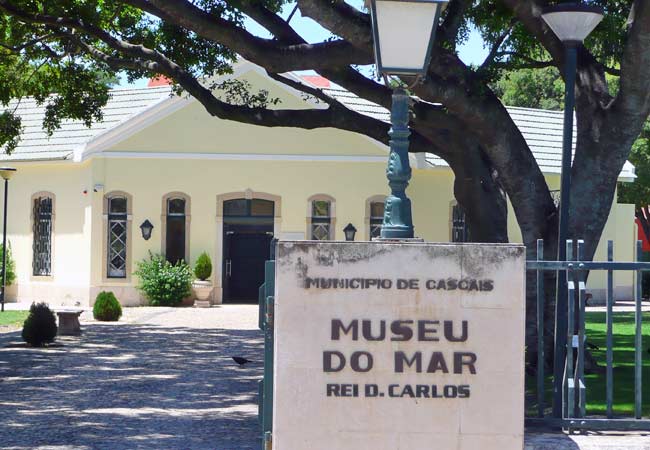
The Sea Museum is housed in the king's former private residence
The Mercado da Vila
The Mercado da Vila is the traditional covered market of Cascais, offering a range of stalls selling freshly caught fish, local produce and handicrafts. Within the market are a beautiful set of Azulejos tile paintings that depict the history and heritage of Cascais.
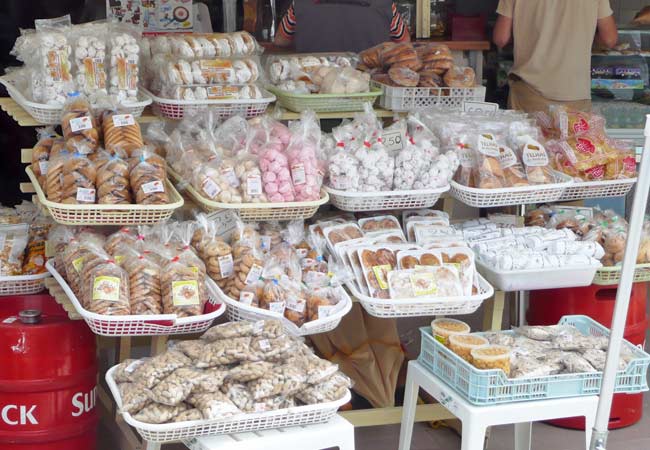
Local sweets, cakes and pastries for sale in the market
Casa da Guia
The Casa da Guia is a trendy shopping complex and dining area, which is situated in the grounds of a grand 19th-century house. The shops and stalls offer high-end designer gifts, while the restaurants provide stunning views over the ocean.
Praia da Ursa (15km drive from Cascais)
If you want a beach that feels like a genuine discovery, this is it. The Praia da Ursa is the most stunning stretch of sand on the Serra de Sintra coastline, and its remoteness keeps the crowds well away.
Getting here is part of the adventure. A dirt track leads to a footpath that scrambles steeply down the side of a collapsed cliff to the beach below. What greets you at the bottom is worth the effort: a wild, rugged cove dominated by two enormous rocky outcrops, sections of harder rock that have stood firm while the Atlantic wore everything else away.
The larger of these is the 'Rocha da Ursa', which supposedly resembles a bear (ursa in Portuguese) and gives the beach its name. Don't worry if you can't see the bear though, it has been pointed out to me on many occasions and I still can't see it.
Insight: There is a very scenic 1.7km coastal path from the Cabo da Roca to the Praia da Ursa, which is a great way to extend a visit to the Cabo da Roca.
The Praia da Ursa as seen from the coastal footpath to the Cabo da Roca

There are better places to park than this…
The Oeiras Coastal Promenade
The Oeiras Coastal Promenade is a 4km paved pathway that connects the towns of Oeiras and Paço de Arcos. The promenade is lined with sandy beaches, cafes and parks. It is a fantastic location for walking, jogging or cycling.
The promenade starts at the Praia da Torre and extends to Paço de Arcos, passing the Praia de Santo Amaro. There is a regular train service that connects Cascais to Oeiras and Paço de Arcos.
Cascais' holiday atmosphere
Cascais is a fun destination for a holiday, with a vibrant and buzzing atmosphere during the summer. The town is packed with friendly restaurants and lively bars, and there is always something happening in the evenings and at night. In the summer, Cascais attracts a mix of ages and nationalities and is a fantastic place to be based.
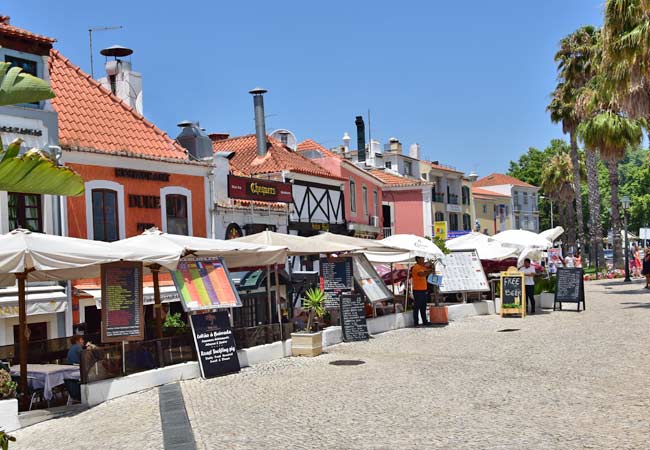
The many bars and restaurants along the Alameda Combatentes street
The Oitavos Dunes Golf Course
The Oitavos Dunes Golf Course is considered one of the best golf courses in Portugal and is situated in a beautiful natural setting amidst the sand dunes of the Serra de Sintra Natural Park.
This world-class golf course was designed by Arthur Hills and has hosted the Portuguese Open on several occasions.
The Estoril Casino
The Estoril Casino is one of the largest casinos in Europe and has long been a popular destination for the rich and famous. The casino offers a wide variety of traditional gambling games, such as roulette, blackjack and poker, as well as thousands of slot machines. The casino also hosts theatre shows and live music. During World War II, the Estoril Casino was a hive of spies, exiles and adventurers, and it is said that Ian Fleming drew inspiration from the casino for his James Bond character.
Our most popular guide for Cascais and Lisbon


Expert Insight: These guides are curated by Philip Giddings, a travel writer with over 25 years of local experience in Portugal. Since 2008, Phil has focused on providing verified, on-the-ground advice for the Cascais region, supported by deep cultural ties through his Portuguese family. Read the full story here.
Cascais-Portugal.com, Sintra-Portugal.com and Lisbon-Portugal-Guide.com with over 800 pages,
if its not here its probably not in Cascais, Estoril or the Lisbon coastline!
 -
-


If you've found our content valuable, we'd welcome your support.
The digital publishing landscape has evolved significantly. As a small independent publisher, we face growing challenges. Search engines increasingly favour paid content over organic results, while AI-generated content often reproduces original work without attribution.
To support our work, please consider bookmarking this page (press Ctrl + D) for quick access. If you find an article helpful, we'd be grateful if you'd share it with friends on social media.
For specific questions, please see our Reddit community at r/LisbonPortugalTravel.
Should you notice any outdated or incorrect information, please contact us at [email protected]
Thank you for helping us continue to provide valuable content in an increasingly challenging digital environment.